


Megadoc
Review Date:
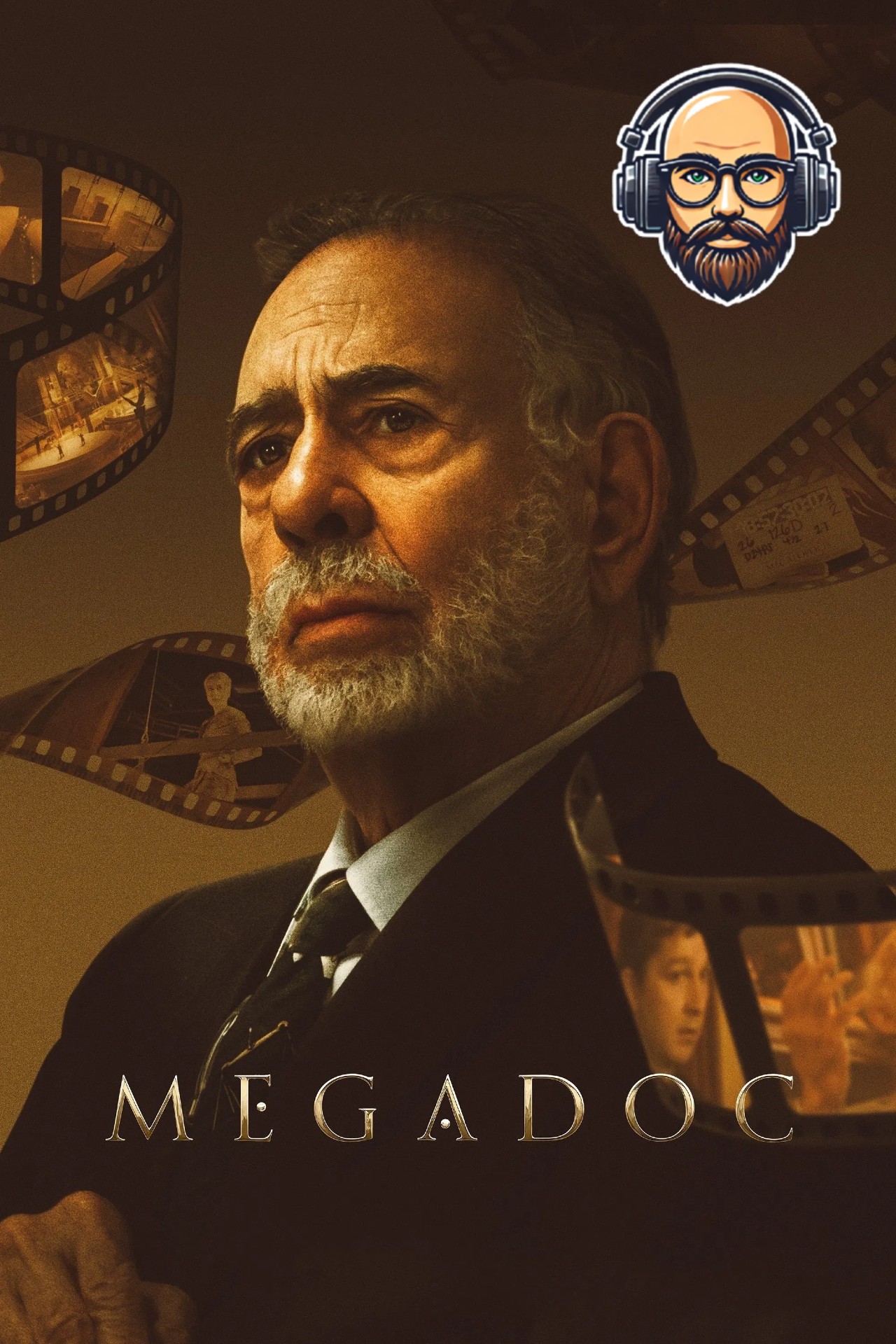
Synopsis: Presenting a behind-the-scenes account of a visionary at work. From Oscar-nominated Mike Figgis, Megadoc gives audiences an unfiltered and intimate look at the making of Francis Ford Coppola’s epic sci-fi drama Megalopolis.
Review:
Too Long Don’t Read TL&DR
Megadoc is a deeply immersive look at Francis Ford Coppola’s decades-long pursuit of Megalopolis — a self-financed, all-in creative gamble that reflects both the ambition and vulnerability of late-career auteur filmmaking.
Directed by Mike Figgis, the documentary offers rare, intimate access to Coppola’s process, capturing an artist still chasing ideas larger than the industry around him. While cinephiles may notice echoes of classic behind-the-scenes documentaries, Megadoc stands firmly on its own as a portrait of creative endurance rather than collapse.
For longtime film fans, Megadoc will trigger inevitable comparison to earlier documentaries about ambitious, high-risk filmmaking, including Hearts of Darkness: A Filmmaker’s Apocalypse. But where those films often focused on chaos and breakdown, Megadoc is more reflective — concerned with legacy, relevance, and the act of continuing to create in an industry that no longer prioritizes singular visions.
Figgis camera observes a Coppola that is not as a man unraveling, but as one pushing forward with purpose, intention and resolve. That doesn’t mean that there aren’t moments of anger, frustration and exhaustion from Francis. The casting process and actor’s approaches are varied, chaotic and meeting Francis’ energy, whether that is one-on-one, acting games or onset. There are amazing examples of the cast’s personality and quirks coming to the forefront, Shia LaBeouf and Aubrey Plaza are the most charismatic and chaotic. There are times when Shia feels like he has been summoned from the depths of hell to torture Francis.
One of the most poignant and sweet aspects of the documentary is when Figgis interviews George Lucas, who started his career as an assistant to Francis. Francis went on to produce THX 1138 , American Graffiti kickstarting George’s career. George went on to declare that Francis is flamboyant which is his opposite, even saying that Francis’ jumps off the cliff and he build blocks and foundation.
Figgis treats the documentary almost as a character study amd never mimics the narrative voice of Hearts of Darkness. There’s no consistent narration, no structured descent into chaos. Instead, he lets the footage breathe — vérité-style sequences where Coppola drifts through set builds, artist talks, and moments of confrontation with actors like Shia LaBeouf and Aubrey Plaza.
The camera feels alive and at times pauses and lingers quietly almost as if it has a reverence for the scene unfolding right in front of it. Figgis seems like he is aware he’s documenting one of cinema’s last true romantics and early on described his own excitement to get to see how another director works let alone a master at work. Rather than positioning itself as a direct companion to classic making-of documentaries, Megadoc operates in a different and distinct voice. It replaces production chaos with contemplation, urgency with patience, and spectacle with introspection but never shies away from the negative rather embracing it as part of Francis’ process.
The result is a film less interested in mythmaking and more focused on the day-to-day reality of sustaining a creative vision over time. This approach that truly resonated with me as a peek inside a master’s technique, process and organized chaos, not just the outcome.
Megadoc may never achieve the mythic stature of Hearts of Darkness that it will be constantly compared to, but it doesn’t need to. It’s not the story of a man losing control of a masterpiece even though that was how the film was described throughout it’s creation. This documentary is more a man reclaiming control of his mythology, finishing his long time passion project.
It’s an essential companion piece to Megalopolis and a haunting reminder that cinema’s wildest visions are still possible, but only if someone is brave (or foolish) enough to bet everything on them.
Special thanks to Utopia Distribution for sharing a screener link for me to prepare this review before the release on Criterion Channel today.
 Never miss a story from us, subscribe to our newsletter